
Your free bookkeeping app would like to present its invoice.
Not the one you see — the one you don’t. The one that’s been accruing quietly in the background while you congratulated yourself on saving $29/month.
We went through the receipts. Here’s what “free” actually costs.
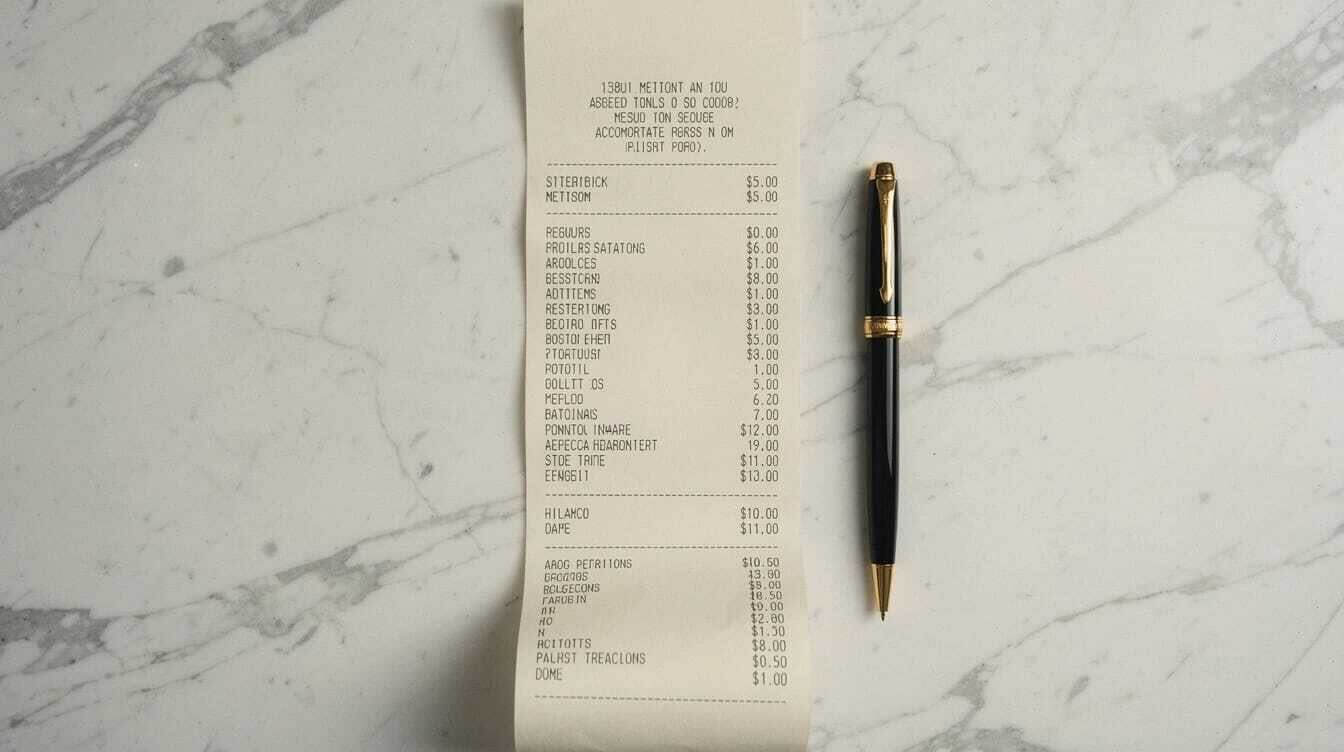
The itemized bill
Line item 1: Your time — $4,800/year
That “free” tool takes 2 extra hours per week in workarounds, manual exports, and hunting for the thing that should be obvious but isn’t. At a conservative $50/hour for your time, that’s $4,800 annually.
You didn’t save $348. You spent $4,800 to save $348.
Line item 2: The integration tax — $1,200/year
Free tools don’t talk to each other. So you bought Zapier. And a CSV converter. And you’re paying someone on Fiverr to build a Google Sheet that bridges the gap between your bank feed and your bookkeeping app.
Congratulations — you’ve built a Rube Goldberg machine out of duct tape and subscription fees.
Line item 3: The error rate — $2,400/year
Manual data entry has a 1–4% error rate. On 500 monthly transactions, that’s 5–20 errors. Each one takes 15–30 minutes to find and fix. Some you never find at all — they just quietly make your books wrong.
Wrong books lead to wrong decisions. Wrong decisions have a cost, but it’s the kind you only see in the rearview mirror.
Line item 4: The anxiety surcharge — priceless
The nagging feeling that your numbers aren’t quite right. The dread before quarterly taxes. The 11 PM spreadsheet sessions because your “automated” tool automated the wrong thing and now everything’s off by $3,000.
You can’t put a dollar amount on this. But if you could, you’d pay to make it stop.
Line item 5: The opportunity cost — incalculable
Every hour spent wrestling with inadequate tools is an hour not spent on the thing you actually do. The client proposal. The strategic plan. The afternoon off that would have prevented the burnout that’s been creeping in since October.
This is the most expensive line item on the receipt, and it never shows up on any report.

The subtotal
| Item | Annual cost |
|---|---|
| Your time | $4,800 |
| Integration tax | $1,200 |
| Error rate | $2,400 |
| Anxiety surcharge | Incalculable |
| Opportunity cost | Incalculable |
| Total | $8,400+ per year |
That “free” tool costs you $8,400 a year. Minimum. And we’re being generous.

The alternative
What if your banking and bookkeeping lived in the same place? What if transactions categorized themselves? What if reconciliation happened automatically, in real time, with no CSV exports and no Zapier chains and no Fiverr contractors?
What if the tool cost $29/month but saved you $700?
That’s not a cost. That’s a 24x return.
The receipt
We’re not saying free tools are always bad. We’re saying they’re rarely free. And the businesses that thrive long-term are the ones that understand the difference between the price of a tool and the cost of using it.
Check your receipts. The real ones.
Begin a conversation
If you’re ready to stop overpaying for “free,” we’d love to show you what integrated banking and bookkeeping actually looks like. Reach out at support@getholdings.com or book a call.
— The Holdings Team